Introduction
The monsoon season brings cooler weather and much-needed relief from the heat, but increased humidity, sweating and frequent exposure to rain can create new challenges for your scalp and hair. Many people notice more itching, flakes, oily scalp, unpleasant scalp odor or increased hair shedding during this time.
While occasional dandruff may seem like a minor concern, persistent flaking or itching can sometimes indicate an underlying scalp condition that requires professional attention.
If you are looking for dandruff treatment in Wakad, a hair specialist in Wakad, or a scalp specialist in Wakad, understanding what is causing your symptoms is an important first step.
At Skin and Scalps, Dr. Sohana Sharma provides professional dermatological evaluation for various skin, scalp and hair concerns. The goal is to identify the underlying problem and recommend treatment according to the individual’s condition rather than relying on trial-and-error products.
Why Can Dandruff and Scalp Problems Increase During Monsoon?
The scalp naturally produces oil, and during humid weather, sweat and moisture can remain on the scalp for longer. When combined with oil, dead skin cells, pollution and hair-product buildup, this environment may make certain scalp problems more noticeable.
Monsoon-related scalp concerns may include:
- Increased dandruff and flaking
- Scalp itching
- Excess oiliness
- Seborrheic dermatitis
- Scalp inflammation
- Folliculitis
- Fungal scalp infections
- Scalp odor
- Increased hair shedding
- Hair breakage
- Localized patches of hair loss
It is important to remember that not every flaky or itchy scalp has the same cause. Dandruff, seborrheic dermatitis, eczema, psoriasis and fungal infections can sometimes produce similar-looking symptoms.
That is why persistent or unusual scalp symptoms should not always be managed by simply switching shampoos.
Dandruff vs Scalp Infection: What Is the Difference?
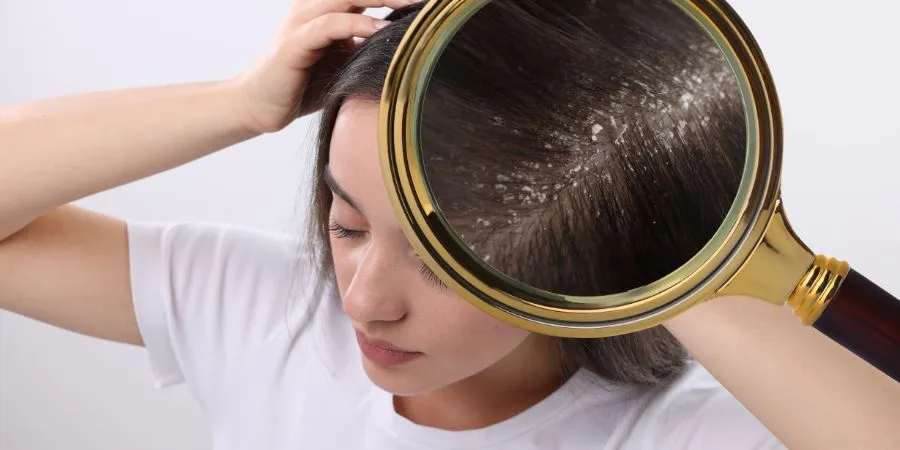
Dandruff commonly causes visible flakes and itching. It may occur with an oily scalp and can be associated with seborrheic dermatitis.
A scalp fungal infection, such as tinea capitis, can present differently. Some people may develop scaly patches, inflammation, broken hairs or areas where hair appears to be thinning or falling out.
Certain scalp conditions can look similar during the early stages. A dermatologist may therefore need to assess the scalp carefully before deciding on treatment.
Signs That Need More Attention
You should consider consulting a dermatologist if dandruff is accompanied by:
- Small or large areas of hair loss
- Broken hairs
- Significant redness
- Pain or tenderness
- Swelling
- Thick crusts
- Pus or discharge
- Rapidly worsening symptoms
- Persistent itching despite regular scalp care
These symptoms should not automatically be attributed to ordinary dandruff.
7 Ways to Protect Your Scalp During Monsoon
1. Maintain a Consistent Scalp-Care Routine
Regular scalp cleansing can help remove sweat, excess oil and accumulated residue.
However, washing your hair excessively or using very harsh cleansing products is not necessarily better. The ideal frequency depends on your scalp condition, hair type and daily activities.
If you frequently experience flakes despite maintaining a proper routine, it may be time to seek professional advice for dandruff treatment in Wakad.
2. Never Leave Your Scalp Wet for Long
Rainwater, sweat and washing can all leave the scalp damp.
After your hair gets wet:
- Gently dry your scalp and hair.
- Avoid tying wet hair tightly.
- Do not go to bed with soaking-wet hair.
- Give your scalp adequate time to dry.
- Make sure towels are completely dry before reuse.
Keeping the scalp reasonably dry and comfortable is especially important during humid weather.
3. Keep Your Helmet Clean
Helmets are essential for daily travel, especially for people commuting around Wakad, Hinjewadi, Tathawade, Punawale and surrounding areas.
A helmet lining that remains sweaty or damp can become uncomfortable and may contribute to scalp irritation.
Clean the helmet lining regularly according to the manufacturer’s instructions and allow it to dry completely.
If wearing a helmet consistently causes itching, irritation or excessive sweating, discuss the symptoms with a scalp specialist in Wakad.
4. Do Not Keep Scratching Your Scalp
An itchy scalp can create a strong urge to scratch. Repeated scratching may damage the skin barrier and increase irritation.
Instead of focusing only on stopping the itch, it is important to understand why the scalp is itchy.
Possible causes include:
- Dandruff
- Seborrheic dermatitis
- Eczema
- Psoriasis
- Folliculitis
- Fungal infection
- Irritation from hair-care products
Persistent itching deserves attention, particularly when it is accompanied by redness, scaling or hair loss.
5. Choose Anti-Dandruff Products Carefully
Anti-dandruff shampoos can help manage certain forms of dandruff, but not every scalp condition responds to the same ingredient.
Using multiple medicated shampoos at once or changing products repeatedly may irritate the scalp without addressing the underlying problem.
If dandruff is persistent or keeps returning, a dermatologist in Wakad can assess your scalp and determine whether you need a medicated shampoo or another form of treatment.
6. Avoid Sharing Personal Hair Items
Certain scalp infections can spread through close contact or contaminated personal items.
For better hygiene, avoid sharing:
- Combs
- Hairbrushes
- Towels
- Caps
- Helmets
- Hair accessories
This is particularly important if someone in the household has a suspected scalp infection.
7. Be Careful With Self-Medication
Many people try to treat scalp itching or redness with creams purchased without professional advice.
This can sometimes create problems, especially when a fungal infection is involved. Steroid-containing products may temporarily reduce redness and itching while potentially allowing an infection to progress or making the clinical appearance less obvious.
If you suspect an infection, getting the correct diagnosis is safer than repeatedly trying different creams.
Can Monsoon Dandruff Cause Hair Fall?
Dandruff itself does not necessarily mean that permanent hair loss will occur.
However, an irritated or inflamed scalp may lead to increased scratching and hair shedding. In addition, some scalp conditions associated with scaling or inflammation can contribute to temporary hair loss or hair breakage.
If you notice hair fall together with persistent itching, scaling, redness or localized patches of hair loss, it is worth getting the scalp examined.
A hair specialist in Wakad can help determine whether the hair fall is related to a scalp condition or whether another underlying factor needs to be considered.
When Should You Consult a Scalp Specialist?
Occasional dandruff can often be managed with appropriate scalp care. However, professional evaluation becomes more important when symptoms are persistent, recurrent or unusual.
Consider consulting a dermatologist if you have:
- Dandruff that keeps returning
- Severe scalp itching
- Persistent redness
- Painful bumps
- Scalp swelling
- Crusting or discharge
- Scaly patches
- Broken hairs
- Sudden localized hair loss
- Increased hair shedding with scalp symptoms
- Symptoms that do not improve with basic care
Early evaluation can help distinguish common dandruff from conditions that may require specific treatment.
Dandruff Treatment in Wakad at Skin and Scalps
If you are searching online for “dandruff treatment near me,” “scalp infection treatment in Wakad,” “hair specialist near me,” or “dermatologist near me in Wakad,” choosing a clinic that provides professional evaluation can help you address persistent scalp concerns appropriately.
At Skin and Scalps, Dr. Sohana Sharma evaluates scalp and hair concerns based on the individual’s symptoms and clinical condition.
Depending on the diagnosis, treatment for dandruff or scalp-related conditions may involve:
- Appropriate medicated shampoos
- Scalp-specific topical treatments
- Antifungal treatment when clinically indicated
- Treatment for seborrheic dermatitis
- Management of associated inflammation
- Hair and scalp care recommendations
- Follow-up assessment when required
The treatment approach depends on the cause, severity and individual response.
Why You Should Not Treat Every Scalp Problem as Dandruff
One of the most common mistakes is assuming that every white flake is dandruff.
A similar-looking scalp may actually be affected by seborrheic dermatitis, eczema, psoriasis, folliculitis or a fungal infection.
For example, persistent scaling combined with broken hairs or localized hair loss deserves more attention than ordinary occasional dandruff.
Correct identification of the condition can help avoid unnecessary treatments and improve the chances of getting appropriate care.
Monsoon Scalp Care Checklist
| Scalp Care Habit | Why It Matters |
|---|---|
| Wash your scalp appropriately | Helps remove sweat and excess oil |
| Dry your hair after rain | Reduces prolonged dampness |
| Keep your helmet clean | Helps reduce sweat and irritation |
| Avoid sharing combs and towels | Supports better hygiene |
| Avoid repeated scratching | Helps prevent additional irritation |
| Use suitable anti-dandruff products | Can help manage certain types of dandruff |
| Avoid unsupervised medicated creams | Reduces the risk of inappropriate treatment |
| Watch for hair loss or broken hairs | May indicate a condition beyond simple dandruff |
Frequently Asked Questions
1. Is dandruff more common during monsoon?
Some people may notice increased dandruff or scalp irritation during humid weather because sweating, oiliness and moisture can make existing scalp problems more noticeable.
2. Can a fungal infection cause hair loss?
Yes. Certain fungal infections of the scalp can cause scaling, broken hairs and localized areas of hair loss. Professional evaluation is important when these symptoms occur.
3. How can I prevent dandruff during the rainy season?
Maintaining appropriate scalp hygiene, drying the scalp after getting wet, keeping helmets and personal hair-care items clean, and using suitable anti-dandruff products can help.
4. Should I wash my hair every day during monsoon?
There is no single washing schedule that suits everyone. It depends on your scalp, hair type, sweating and existing scalp condition. Excessive washing with harsh products may cause irritation.
5. When should I see a dermatologist for dandruff?
Consider professional evaluation if dandruff is persistent, severe, frequently recurring or associated with redness, crusting, pain, broken hairs or hair loss.
6. Can I use a steroid cream for an itchy scalp?
Do not use steroid-containing creams on a suspected scalp infection without professional advice. The appropriate treatment depends on the underlying diagnosis.
7. Where can I get scalp infection treatment in Wakad?
If you are experiencing persistent itching, scaling, redness, suspected infection or hair loss, Skin and Scalps, under Dr. Sohana Sharma, provides professional evaluation for scalp and hair concerns in Wakad.
Protect Your Scalp This Monsoon
Monsoon-related scalp problems can range from simple dandruff to inflammatory or infectious conditions. While basic scalp hygiene can help, persistent itching, unusual scaling or hair loss should not be ignored.
If your scalp problem keeps coming back despite home care, avoid repeatedly changing shampoos or using random medicated creams. A proper dermatological assessment can help identify the underlying cause and guide suitable treatment.
If you are looking for dandruff treatment in Wakad, scalp infection treatment in Wakad, a hair specialist in Wakad, or a scalp specialist near you, consult Skin and Scalps with Dr. Sohana Sharma for professional evaluation and personalized guidance.
Book a consultation with Skin and ScalpsSkin and Scalps to understand your scalp concern and find an appropriate treatment approach.
