
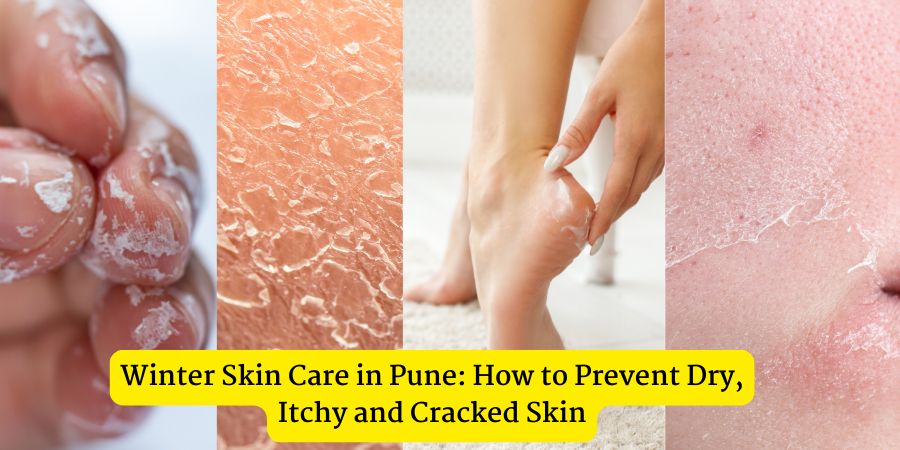
Winter is finally here! While the cooler weather in Pune feels refreshing, many people start noticing changes in their skin. Their hands become dry, legs feel itchy, lips start cracking and sometimes even the skin around the heels becomes painful.
Does this sound familiar?
You are not alone. Dry skin is one of the most common problems people experience during winter. Changes in temperature, dry air, hot showers and harsh soaps can affect your skin’s natural moisture.
The good news is that a few simple changes to your daily skincare routine can make a big difference.
In this guide, let’s understand why skin becomes dry during winter, which bathing products you should choose, how to take care of your skin at home and when it is time to visit a dermatologist.
1. How Does Winter Weather in Pune Affect Your Skin?
Pune generally experiences pleasant winters, but mornings and nights can become quite cold. The air also tends to become drier during this season.
When humidity in the air decreases, your skin loses moisture more easily. This can make it feel tight, rough, flaky and uncomfortable.
Some common reasons behind winter dryness include:
- Cold and dry air: Lower humidity can increase moisture loss from the skin.
- Hot water baths: Very hot water can remove the natural oils that protect your skin.
- Harsh soaps: Strong cleansers may make dry skin even worse.
- Less moisturising: Skipping moisturiser allows the skin to lose more moisture.
- Indoor heating: Dry indoor environments can also contribute to skin dryness.
That is why taking care of your skin becomes especially important during the winter months.
2. Common Skin Problems During Winter
Not everyone experiences winter dryness in the same way. Some people notice mild dryness, while others develop itching, cracks or worsening of existing skin conditions.
Dry Skin (Xerosis)
Dry skin is probably the most common winter skin complaint. Your skin may feel tight after bathing, look dull or develop small white flakes. The hands, legs, elbows and face are commonly affected.
Cracked Heels and Hands
When the skin becomes extremely dry, it can lose its flexibility and develop cracks. These are particularly common around the heels, fingertips and hands. Deep cracks can become painful and may even bleed.
Winter Eczema
People who already have eczema may notice more itching, redness and irritation during winter. Cold weather and reduced moisture can weaken the skin barrier and trigger flare-ups.
Winter Itching
Sometimes your skin feels itchy even when there is no visible rash. This can happen because of excessive dryness. Frequent hot showers and harsh soaps may make the itching worse.
Dry and Chapped Lips
Lips can become dry and cracked quite easily during winter because they have fewer natural oil glands than most other areas of the skin.
Dandruff and Dry Scalp
Your scalp also needs attention during winter. Some people experience dryness, itching and visible flakes. However, dry scalp and dandruff are not always the same thing. Persistent dandruff may need specific treatment.
3. How to Take Care of Your Skin During Winter
You do not need a complicated skincare routine to keep your skin healthy. Following a few basic steps every day can help.
Morning Skincare Routine
- Wash your face with a gentle cleanser.
- Apply a moisturiser suitable for your skin type.
- Use broad-spectrum sunscreen with SPF 30 or higher on exposed skin.
- Apply a moisturising lip balm.
Night Skincare Routine
- Clean your face gently before going to bed.
- Apply a good moisturiser.
- Give extra attention to dry areas such as elbows, knees and hands.
- Apply lip balm before sleeping.
The most important thing is to follow your routine consistently rather than using too many products.
4. Which Soap Is Best for Dry Skin During Winter?
Have you ever noticed that your skin feels unusually tight immediately after taking a bath? Your bathing soap could be one of the reasons.
Some regular soaps contain strong cleansing ingredients that remove too much of the skin’s natural oil. During winter, it is better to choose a gentle cleansing product.
Here are some options to consider:
- Glycerin-based soap: Helps attract moisture and can be a useful option for people with dry skin.
- Moisturising cleansers: Help clean the skin without leaving it feeling excessively dry.
- Soap-free cleansers: Syndet cleansers are often suitable for dry and sensitive skin.
- Fragrance-free products: May be a better choice for people whose skin gets irritated easily.
Tip: Avoid very hot water, harsh soaps and excessive scrubbing. A gentle cleanser and regular moisturising are usually better for dry winter skin.
5. Which Shampoo Should You Use During Winter?
Winter can affect your scalp just as much as your skin. If you notice dryness, flakes or itching, choosing the right shampoo is important.
If You Have a Dry Scalp
Choose a mild shampoo that cleans your scalp without making it feel excessively dry. Avoid washing your hair too frequently if it increases dryness.
If You Have Dandruff
A medicated anti-dandruff shampoo may be required. Ingredients such as ketoconazole, selenium sulfide or zinc pyrithione are used in certain anti-dandruff formulations. The right choice depends on your scalp condition.
If You Have a Sensitive Scalp
Consider a gentle, fragrance-free shampoo and avoid products that cause irritation.
Also remember to use conditioner on your hair lengths, avoid very hot water and try not to scratch an itchy scalp.
6. Which Body Lotion Is Best During Winter?
A good body moisturiser is one of the easiest ways to protect your skin during winter. But with so many lotions, creams and moisturisers available, choosing one can be confusing.
Instead of focusing only on the brand, look at the ingredients.
- Glycerin: Helps attract water to the skin.
- Ceramides: Help maintain the skin’s natural protective barrier.
- Hyaluronic Acid: Helps attract and retain moisture.
- Shea Butter: Helps soften and moisturise dry skin.
- Petrolatum: Helps prevent moisture loss and is useful for very dry areas.
Body Lotion vs Cream vs Ointment
- Body lotion: Generally suitable for normal skin and mild dryness.
- Moisturising cream: Often better for dry and rough skin.
- Ointment: Useful for very dry or cracked areas because it creates a protective layer.
One simple habit that helps: Apply moisturiser immediately after bathing, while your skin is still slightly damp. This helps reduce moisture loss.
7. 10 Simple Home Care Tips for Winter Skin
Taking care of dry skin does not always mean spending a lot of money on skincare products. Small daily habits can help protect your skin.
- 1. Use lukewarm water: Avoid very hot showers because they can remove natural oils.
- 2. Keep baths short: Try to limit your bathing time to around 5–10 minutes.
- 3. Moisturise after bathing: Apply a suitable cream or lotion while your skin is slightly damp.
- 4. Drink enough water: Maintain normal hydration throughout the day.
- 5. Wear comfortable clothes: Soft cotton clothing can help reduce irritation from woollen fabrics.
- 6. Take care of your feet: Apply a thick moisturiser to dry heels before bedtime.
- 7. Avoid excessive scrubbing: Rough loofahs and harsh scrubs can irritate dry skin.
- 8. Do not forget sunscreen: UV protection is important even during winter.
- 9. Use a humidifier if needed: It may help when indoor air is particularly dry.
- 10. Avoid harsh home remedies: Lemon juice, baking soda and rough DIY scrubs can irritate the skin.
8. When Should You Visit a Dermatologist?
Most mild cases of winter dryness can improve with simple skincare. However, not every dry or itchy skin problem is caused by the weather.
Sometimes, the symptoms may be related to eczema, psoriasis, allergies or another underlying skin condition.
It is a good idea to consult a dermatologist if:
- Your skin is extremely dry and does not improve with moisturiser.
- You experience severe or continuous itching.
- Your skin develops painful cracks or starts bleeding.
- You notice redness, swelling or inflammation.
- You have recurring eczema or psoriasis flare-ups.
- Your dandruff is severe or accompanied by persistent scalp itching.
- You notice pus, increasing pain or other signs of infection.
A dermatologist can examine your skin, understand the underlying cause and recommend suitable treatment.
Avoid using steroid creams, antifungal creams or medicated shampoos without appropriate medical advice.
9. Consult a Dermatologist at Skin and Scalps Clinic, Wakad, Pune
If winter dryness, itching, cracked skin or scalp problems are affecting your daily comfort, getting the right medical advice can help.
Dr. Sohana Sharma – Founder & M.D., Skin and Scalps Clinic
At Skin and Scalps Clinic, Wakad, Pune, patients can seek consultation for different skin and hair concerns. The clinic focuses on understanding individual skin conditions and recommending appropriate care.
Some of the skin and hair concerns for which patients can seek consultation include:
- Dry skin and skin allergies.
- Eczema and psoriasis.
- Acne and pimples.
- Skin pigmentation concerns.
- Dandruff and scalp problems.
- Hair fall and hair-related concerns.
Whether you are dealing with seasonal skin dryness or a persistent skin concern, a professional evaluation can help you understand what your skin needs.
Visit Skin and Scalps Clinic
Clinic Name: Skin and Scalps Clinic
Doctor: Dr. Sohana Sharma
Address: 4th Floor, Sonigara Landmark, Office No. 407, Kaspate Wasti, Wakad, Pune, Pimpri-Chinchwad, Maharashtra – 411057.
Website: skinandscalpsclinic.com
Book an Appointment: Contact Skin and Scalps Clinic
10. Frequently Asked Questions About Winter Skin Care
1. Why does my skin become dry during winter in Pune?
Cold temperatures and lower humidity can increase moisture loss from your skin. Hot showers and harsh soaps can make dryness worse.
2. Which soap is best for dry skin during winter?
Glycerin-based soaps, moisturising cleansers and soap-free syndet cleansers are generally good options. Choose a gentle, fragrance-free product if you have sensitive skin.
3. Which body lotion should I use in winter?
Look for ingredients such as glycerin, ceramides, hyaluronic acid or shea butter. For very dry skin, a thicker moisturising cream may be more suitable than a light lotion.
4. Is it better to take a hot or cold shower during winter?
Lukewarm water is best. Very hot water can strip away natural oils and make your skin dry and itchy.
5. Why do my heels crack during winter?
Excessive dryness, thickened skin and pressure on the heels can cause cracks. Regular moisturising with a thick cream or petroleum jelly may help. Deep or painful cracks should be examined by a dermatologist.
6. Can I use body lotion on my face?
Not all body lotions are suitable for facial skin. Choose a facial moisturiser according to your skin type. If you are prone to acne, look for a non-comedogenic product.
7. Does dandruff increase during winter?
Some people experience increased dandruff and scalp irritation during winter. Persistent dandruff may need a medicated shampoo and professional advice.
8. How many times should I apply moisturiser during winter?
Apply moisturiser at least twice daily and immediately after bathing. You can apply it more often if your skin feels dry.
9. Can dry skin cause itching without a rash?
Yes. Excessively dry skin can cause itching even when there is no visible rash. If the itching continues, consult a dermatologist.
10. Is sunscreen necessary during winter?
Yes. UV rays can affect your skin throughout the year. Use a broad-spectrum sunscreen with SPF 30 or higher on exposed skin.
11. When should I consult a dermatologist for dry skin?
If dryness is severe, causes painful cracks or bleeding, is associated with redness or swelling, or does not improve with regular moisturising, consult a dermatologist.
12. Where can I consult a dermatologist in Wakad, Pune?
You can visit Skin and Scalps Clinic at Sonigara Landmark, Kaspate Wasti, Wakad, Pune, for skin and hair consultations.
Final Thoughts
Winter skincare does not need to be complicated. A gentle soap, the right shampoo, a good body moisturiser and a few healthy daily habits can go a long way in keeping your skin comfortable.
However, if dryness, itching, cracked skin or dandruff continues despite regular care, do not ignore it.
Every person’s skin is different, so choosing the right skincare routine is important. When in doubt, seek advice from a qualified dermatologist.
Stay comfortable, keep your skin moisturised and enjoy the winter season!
Skin and Scalps Clinic – Your destination for skin and hair care in Wakad, Pune.
