Hair is an important part of our appearance and confidence. Therefore, noticing a sudden round patch of hair loss on the scalp can be alarming. One of the most common reasons behind this type of hair loss is Alopecia Areata, an autoimmune condition that affects both men and women.
The good news is that Alopecia Areata is treatable, especially when diagnosed early. With the right medical care, many patients experience significant hair regrowth and regain their confidence.
At Skin & Scalps Clinic, Wakad, our experienced dermatologists provide personalized treatment plans to help patients manage Alopecia Areata effectively using the latest dermatological treatments and advanced hair restoration techniques.
What is Alopecia Areata?
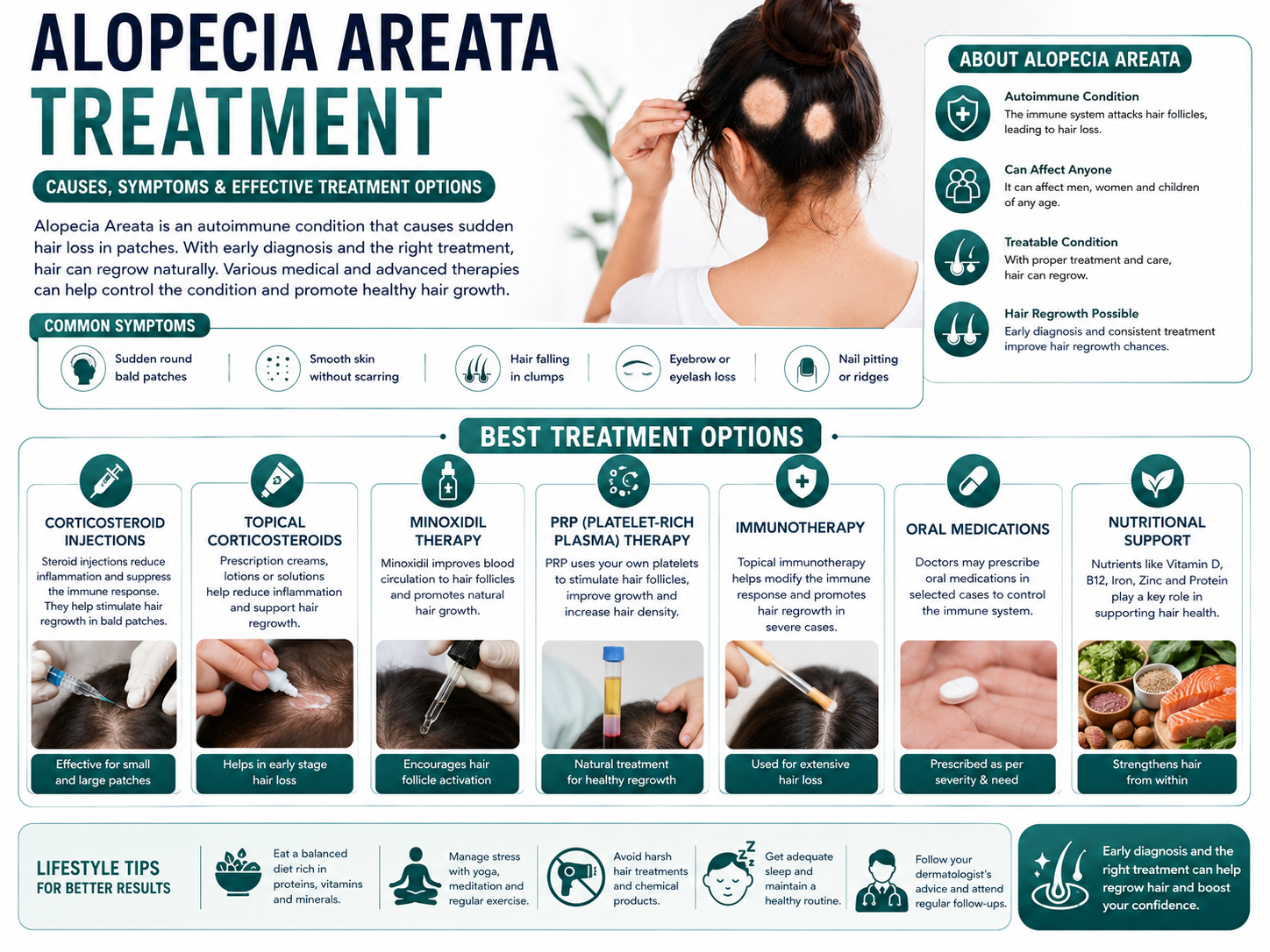
Alopecia Areata is an autoimmune disease in which the body’s immune system mistakenly attacks healthy hair follicles. This causes sudden hair loss in the form of small, round, smooth bald patches on the scalp, beard, eyebrows, eyelashes, or other parts of the body.
Unlike permanent hair loss conditions, Alopecia Areata does not destroy the hair follicles, meaning hair can regrow with appropriate treatment.
Quick Overview
Feature Details
Condition Alopecia Areata
Type Autoimmune Hair Loss
Common Age Any age (Children & Adults)
Gender Men & Women
Hair Loss Pattern Round or Oval Bald Patches
Pain Usually No
Itching Sometimes Mild
Contagious No
Permanent Usually No
Treatment Available Yes
What Causes Alopecia Areata?
The exact cause is still unknown, but several factors increase the risk.
1. Autoimmune Disorder
The immune system mistakenly attacks hair follicles, stopping hair growth temporarily.
2. Genetics
A family history of autoimmune diseases or Alopecia Areata increases the chances.
3. Emotional Stress
While stress isn’t the direct cause, it may trigger or worsen the condition in some individuals.
4. Thyroid Disorders
People with thyroid disease have a slightly higher risk.
5. Vitamin Deficiencies
Low levels of Vitamin D, Iron, Vitamin B12, or Zinc may contribute to poor hair health.
6. Other Autoimmune Diseases
Individuals with conditions like vitiligo, rheumatoid arthritis, psoriasis, or diabetes may have a higher risk.
Symptoms of Alopecia Areata
Recognizing the symptoms early allows faster treatment.
Common signs include:
Sudden round bald patches
Smooth skin without scarring
Hair falling out in clumps
Beard patch hair loss
Eyebrow hair loss
Eyelash hair loss
White hairs appearing before regrowth
Nail pitting or ridges in some patients
Types of Alopecia Areata
1. Patchy Alopecia Areata
The most common type, characterized by one or multiple circular bald patches.
2. Alopecia Totalis
Complete hair loss from the scalp.
3. Alopecia Universalis
Hair loss across the entire body, including eyebrows, eyelashes, beard, and body hair.
4. Diffuse Alopecia Areata
Generalized thinning rather than distinct patches.
How is Alopecia Areata Diagnosed?
A dermatologist usually diagnoses the condition through:
Detailed medical history
Physical scalp examination
Dermoscopy (Trichoscopy)
Hair pull test
Blood tests (Vitamin D, Iron, B12, Thyroid)
Scalp biopsy (only if required)
Early diagnosis helps start treatment before hair loss progresses.
Best Alopecia Areata Treatment Options
Treatment depends on the severity, age, duration, and size of the affected area.
1. Corticosteroid Injections
One of the most effective treatments for small patches.
Benefits:
Reduces inflammation
Suppresses immune attack
Stimulates new hair growth
Hair regrowth often begins within 4–8 weeks.
2. Topical Corticosteroid Creams
Prescription creams and lotions help reduce inflammation and encourage regrowth.
3. Minoxidil Therapy
Minoxidil solution or foam stimulates hair follicles and supports regrowth, often used alongside other treatments.
4. PRP (Platelet-Rich Plasma) Therapy
PRP therapy uses the patient’s own platelets to stimulate hair follicles.
Benefits include:
Improved blood supply
Faster hair growth
Stronger hair follicles
Reduced hair shedding
5. Immunotherapy
For extensive Alopecia Areata, dermatologists may recommend topical immunotherapy to alter the immune response.
6. Oral Medications
In selected cases, oral medications may be prescribed to manage immune activity. These are used under close dermatologist supervision based on the individual’s condition.
7. Nutritional Support
Correcting nutritional deficiencies plays an important supportive role in hair health.
Your dermatologist may recommend supplements after evaluation for:
Vitamin D
Iron
Vitamin B12
Zinc
Protein intake
Can Hair Grow Back?
Yes.
Many patients experience spontaneous hair regrowth, while others benefit significantly from medical treatment.
Hair may initially grow back:
White
Thin
Soft
Over time, it often regains its normal thickness and color.
However, Alopecia Areata can recur, making regular follow-up with a dermatologist important.
Lifestyle Tips to Support Hair Regrowth
Although lifestyle changes alone cannot cure Alopecia Areata, they can support overall hair health.
Eat a Balanced Diet
Include:
Eggs
Fish
Leafy vegetables
Nuts
Seeds
Fruits
Protein-rich foods
Manage Stress
Practice:
Yoga
Meditation
Deep breathing
Regular exercise
Adequate sleep
Avoid Harsh Hair Treatments
Avoid:
Excessive heat styling
Tight hairstyles
Chemical straightening
Frequent hair coloring
Follow Your Dermatologist’s Advice
Never stop medications without medical consultation.
When Should You Visit a Dermatologist?
Seek medical attention if:
Hair loss occurs suddenly.
Round bald patches appear.
Hair keeps falling despite home remedies.
Eyebrows or beard hair start falling.
Multiple bald patches develop.
Hair loss returns after regrowth.
You notice nail changes along with hair loss.
Early treatment can improve outcomes and help prevent progression.
Why Choose Skin & Scalps Clinic, Wakad?
At Skin & Scalps Clinic, Wakad, we understand that hair loss affects not only your appearance but also your confidence and emotional well-being. Our clinic is dedicated to providing advanced dermatology and hair care solutions tailored to every patient’s unique needs.
We offer a comprehensive range of medical, cosmetic, and surgical dermatology services, supported by personalized treatment plans based on detailed clinical evaluation. Along with medical management, we also provide counselling for skin and hair conditions, helping patients understand their condition, adopt healthier lifestyle changes, and rebuild their self-confidence.
Our patient-centered approach focuses on delivering effective, evidence-based care with compassion and transparency, ensuring every individual receives the attention they deserve.
Meet Dr. Sohana Sharma
Dr. Sohana Sharma is the lead aesthetic dermatologist at Skin & Scalps Clinic, Wakad.
She completed her MBBS from Bharati Vidyapeeth and pursued her passion for aesthetic medicine through advanced specialization at an institution affiliated with the German University of Greifswald. With over 8 years of experience in aesthetic dermatology, she has dedicated herself to mastering advanced skin and hair treatments. She has also earned an additional qualification in Hair Transplant, allowing her to offer comprehensive solutions for hair restoration.
Dr. Sohana believes that healthy skin and hair begin with understanding your body’s needs and addressing them with the right medical care and lifestyle guidance. Her commitment to customized treatment plans ensures that every patient receives personalized care aimed at achieving the best possible results.
Why Patients Trust Skin & Scalps Clinic
Experienced dermatology specialists
Personalized treatment plans
Advanced hair restoration therapies
PRP and Hair Growth Treatments
Modern diagnostic techniques
Lifestyle and nutrition guidance
Patient counselling and emotional support
Safe, evidence-based dermatology care
Comprehensive skin, hair, and scalp treatments
Conveniently located in Wakad, Pune
Frequently Asked Questions (FAQs)
1. Is Alopecia Areata permanent?
No. In many cases, hair grows back with appropriate treatment, although recurrence is possible.
2. Can stress cause Alopecia Areata?
Stress is not considered the direct cause, but it may trigger or worsen the condition in susceptible individuals.
3. Is Alopecia Areata contagious?
No. It cannot spread from one person to another.
4. How long does treatment take?
Hair regrowth timelines vary from person to person. Some patients notice improvement within 1–3 months, while others may require longer-term treatment depending on the extent of hair loss.
5. Can children develop Alopecia Areata?
Yes. The condition can occur at any age, including childhood, and should be evaluated by a dermatologist.
6. Does PRP help Alopecia Areata?
PRP may be recommended as part of a personalized treatment plan for selected patients and can support hair regrowth when used alongside other therapies.
7. Will the hair fall again after treatment?
Some patients experience recurrence because Alopecia Areata is an autoimmune condition. Regular follow-up and timely management help reduce the impact of relapses.
8. Which doctor should I consult for Alopecia Areata?
A qualified dermatologist (skin and hair specialist) is the right doctor to diagnose and manage Alopecia Areata.
Conclusion
Alopecia Areata can be emotionally challenging, but it is a manageable condition with early diagnosis and appropriate medical care. If you notice sudden bald patches or unusual hair loss, consulting a dermatologist promptly can improve the chances of successful hair regrowth.
At Skin & Scalps Clinic, Wakad, Dr. Sohana Sharma and her team are committed to providing compassionate, personalized, and evidence-based treatment for hair loss and scalp disorders. Through advanced diagnostic methods, modern therapies, and patient-focused care, we help individuals restore not only their hair but also their confidence.
